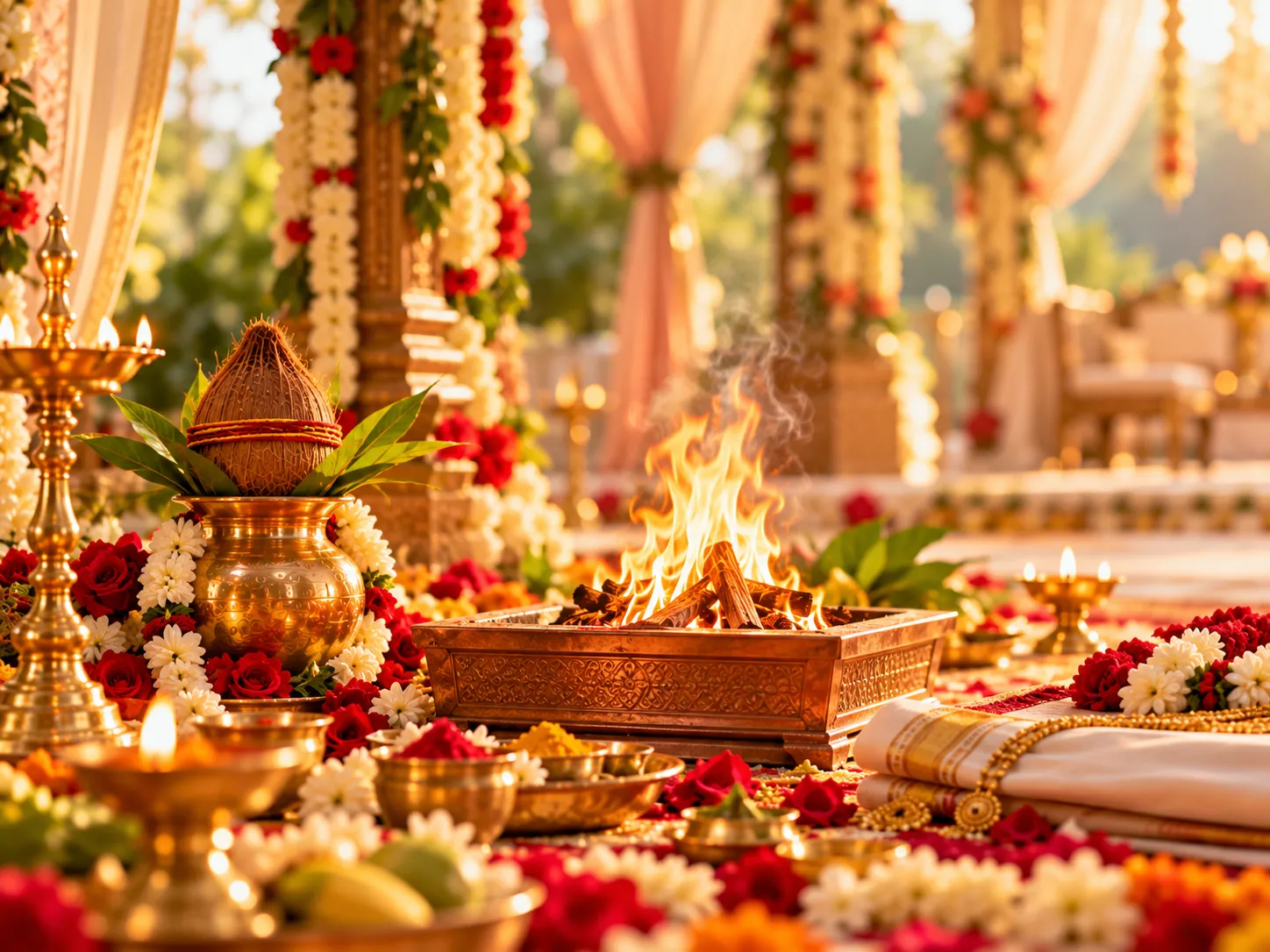


Adhik Masa: The Extra Month and What Pauses During It
Every two to three years the lunar calendar adds a month to stay in step with the Sun. Why it happens, what is postponed, and what the month is meant for.
 Acharya Vishwanath Iyer
29 April 2026 · 3 min read
Acharya Vishwanath Iyer
29 April 2026 · 3 min read

Every two or three years, families planning a wedding or a griha pravesh find that a whole month has quietly disappeared from the calendar of available dates. That month is Adhik Masa, the intercalary or extra month, and it is one of the more elegant features of the Hindu calendar once you see why it exists.
It is also known as Purushottam Masa, after a name of Vishnu, and in some older texts as Mala Masa, the impure month. The two names capture the tradition's attitude: unsuitable for worldly beginnings, highly suitable for devotion.
Why an extra month is needed
The Hindu calendar is lunisolar. Its months follow the Moon, running from one new moon to the next, about twenty-nine and a half days. Twelve such months make roughly three hundred and fifty-four days, around eleven days short of a solar year. Left uncorrected, festivals would drift through the seasons, and Diwali would eventually fall in the monsoon.
The correction is made by reference to the sankrantis, the moments when the Sun enters a new zodiac sign. Normally each lunar month contains one sankranti. Occasionally, because the solar months are slightly longer than lunar ones, a lunar month passes in which the Sun enters no new sign at all. That month is designated Adhik, and it takes the name of the month that follows. This happens roughly every thirty-two to thirty-three months. In 2023, for example, there was an Adhik Shravana, which is why Shravana that year stretched across two months.
The rarer converse, a lunar month with two sankrantis, produces a Kshaya Masa, a lost month, which occurs only at long intervals.
What pauses
Because the month falls outside the normal sequence, the tradition considers it unsuitable for samskaras and new beginnings. Weddings, griha pravesh, mundan, upanayanam, the start of construction and major new ventures are usually postponed. Most practitioners also avoid it for important purchases. Regular festivals that would fall in it are generally observed in the following normal month of the same name.
What the month is for
The other side matters as much. Adhik Masa is traditionally treated as especially meritorious for spiritual practice: japa, the repetition of a mantra; reading the Bhagavata Purana or the Gita; fasting; charity, particularly the giving of food; and worship of Vishnu. In many South Indian temples, special recitations are held through the month. Rites already obligatory, such as shraddha for a death anniversary, are observed according to specific rules that a practitioner can advise on.
The extra month is not a gap in the year but a pause the calendar makes for reflection.
How to plan
If you are planning a sanskara, check early whether an Adhik Masa falls within your preferred window. Its dates are known years in advance, so there is no need to be surprised by it. If it does, the usual approach is to move the main ceremony to the month before or after, and, where the family wishes, to use the month itself for a quieter observance: a Satyanarayan katha, a navagraha shanti, or simply a commitment to daily reading or charity. Many families find that the month, approached in this spirit, becomes a valued part of the year rather than an inconvenience.
Vedic counsel and ritual are traditional and complementary practices — they sit alongside professional medical, legal and financial advice, never as a substitute for it.