Kharmas and Chaturmas: Seasons of Waiting
Two recurring periods pause weddings and housewarmings in many families. What each is, when it falls, and why the tradition treats waiting as meaningful.
 Pandit Rajendra Prasad Mishra
16 December 2025 · 3 min read
Pandit Rajendra Prasad Mishra
16 December 2025 · 3 min read
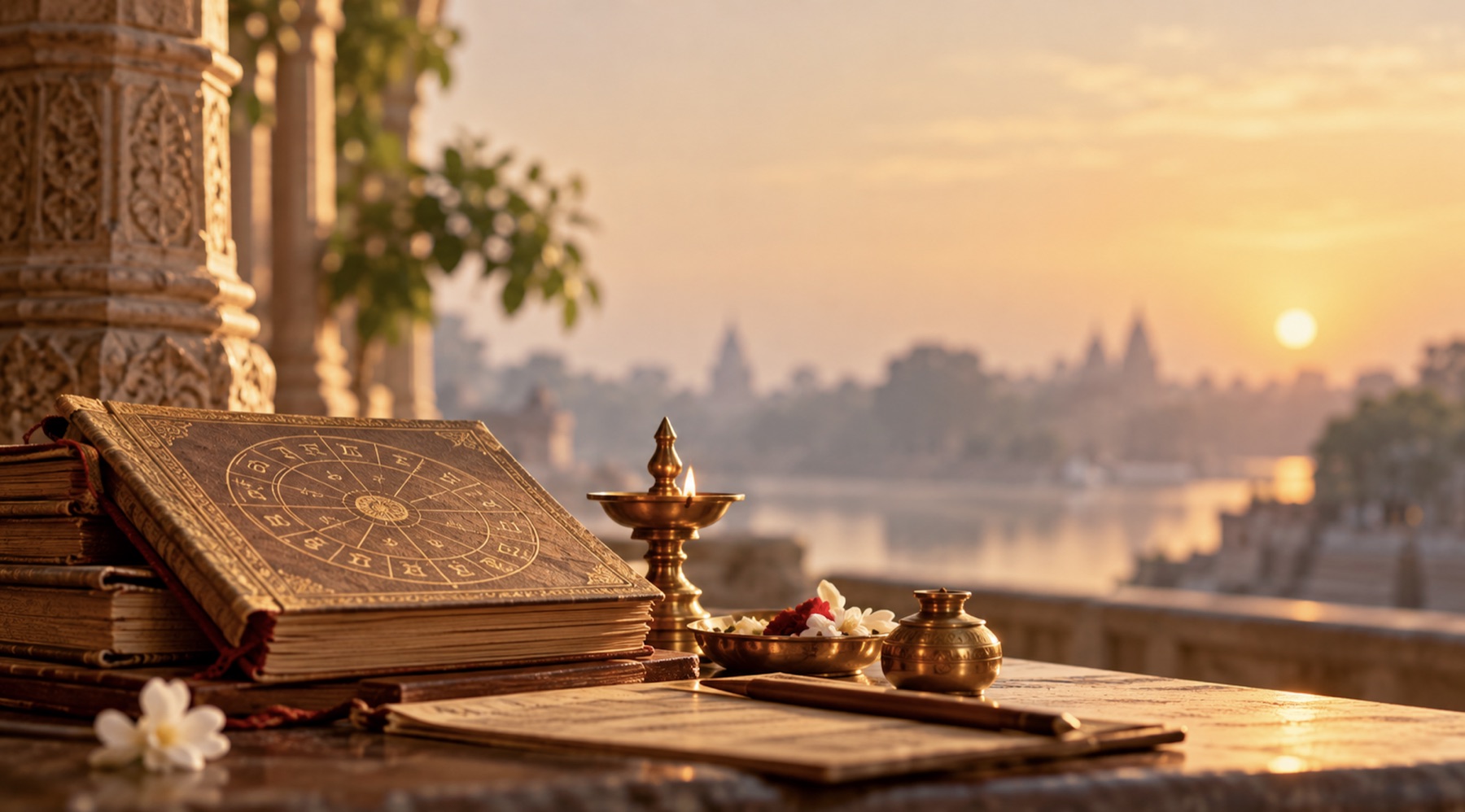
In the old families of Lucknow, the year has always had a shape. There are months of weddings and homecomings, crowded with relatives and music, and there are months when such celebrations are set aside. Two of those quieter seasons, Kharmas and Chaturmas, account for much of the pause, and both are frequently misunderstood as periods of bad luck. They are better understood as seasons of waiting, each with its own purpose.
Kharmas
Kharmas is defined by the Sun. It is the period when the Sun moves through Dhanu (Sagittarius) and Meena (Pisces), the two signs ruled by Jupiter. This occurs twice a year: roughly from mid-December to Makar Sankranti in mid-January, and from mid-March to mid-April.
The traditional explanation is that Jupiter, the guru among the planets and the giver of blessings, is considered less able to bless worldly undertakings while the Sun occupies its signs. Marriage, griha pravesh, mundan, the purchase of property and similar beginnings are therefore postponed. The end of the winter Kharmas at Makar Sankranti is celebrated across India, as Uttarayan, Pongal, Lohri and Magh Bihu, and the wedding season resumes soon after.
Chaturmas
Chaturmas, meaning four months, is defined by the lunar calendar. It begins on Devshayani Ekadashi, the eleventh day of the bright half of Ashadha, usually in late June or July, and ends on Prabodhini Ekadashi in Kartika, usually in November. The tradition holds that Vishnu enters yoga nidra, a meditative rest, at the start and awakens at the end.
During these months, weddings and most major sanskaras are traditionally not performed. Instead, the period is given to discipline and devotion. Many people adopt a dietary restraint, giving up certain foods for the season. Monks and sannyasis traditionally stop wandering and remain in one place, which is the origin of the custom in Jain practice as well. Festivals continue in abundance: Raksha Bandhan, Janmashtami, Ganesh Chaturthi, Navaratri and Diwali all fall within Chaturmas.
A season of waiting is not an empty season; it is simply given to a different kind of work.
What continues
It is worth being clear about what is not paused. Daily puja, festival observances, shraddha for ancestors, havans for wellbeing and many temple rites continue as usual. Namkaran, the naming ceremony, is generally held at its appointed time after birth. Antim sanskar, the last rites, is never delayed for the calendar. Families with urgent reasons, such as a parent's illness, sometimes hold a simple ceremony during these periods after consulting their priest, and the tradition has room for that.
Regional practice also varies. Some communities observe Chaturmas strictly; others treat only part of it, or emphasise Kharmas more. A family's own custom should guide the decision.
Planning with the seasons
For practical planning, both periods are predictable, and their dates are published well in advance. If you are considering a wedding or a housewarming in the coming year, mark them on the calendar first and work around them. The pause can also be used well, for the engagement, for preparations, or simply for the quieter devotional life the tradition intended these months to hold.
Vedic counsel and ritual are traditional and complementary practices — they sit alongside professional medical, legal and financial advice, never as a substitute for it.