

Griha Pravesh: The Ceremony, Step by Step
Entering a new home is traditionally marked with care: a chosen muhurat, a kalash at the threshold, milk boiled in the kitchen. The ceremony, step by step.
 Pandit Arvind Mehta
23 March 2025 · 3 min read
Pandit Arvind Mehta
23 March 2025 · 3 min read

Moving into a new home is one of the few moments in modern life when almost every Indian family, whatever its level of observance, pauses for a ritual. Griha Pravesh, literally "entering the house", marks the transition from a building to a home. It is a ceremony of purification, welcome and blessing, and it is worth understanding each step so that it can be done with attention rather than in a rush between movers and paperwork.
The tradition distinguishes three kinds. Apoorva griha pravesh is the first entry into a newly built house. Sapoorva griha pravesh is re-entry into a home after a long absence, such as travel abroad. Dwandwah griha pravesh is entry after renovation, or after a home has been rebuilt following damage. The core of the ceremony is similar in each.
Choosing the muhurat
The timing is chosen with care. Traditionally, griha pravesh is favoured during the Sun's northern course, and in months such as Magha, Phalguna, Vaishakha and Jyeshtha. Certain periods are generally avoided, including Chaturmas, the four months of the monsoon, and the time of Pitru Paksha. A practitioner will look for a suitable tithi, the lunar day; a favourable nakshatra, such as Rohini, Mrigashira, Uttara Phalguni, Chitra or Anuradha; a good weekday; and an auspicious lagna at the moment of entry. They may also consider the family's own charts.
Modern life does not always allow an ideal date, and a good practitioner will help you find the best practical option within your constraints rather than insisting on a date months away.
Before the day
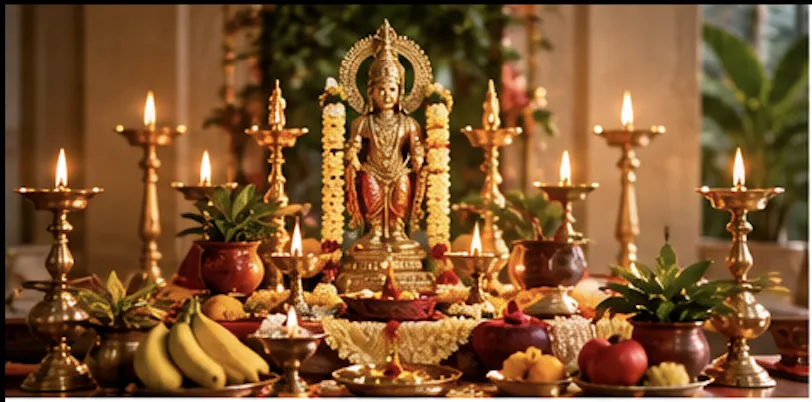
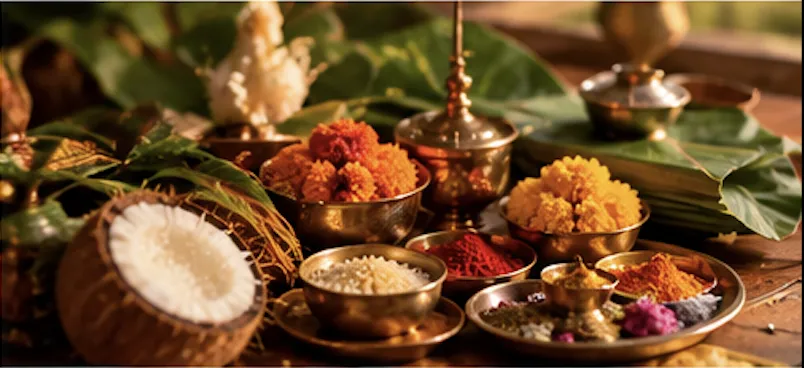
The home should be clean, the main door fitted, and the roof complete. Traditionally the house is decorated with a toran, a garland of mango leaves and marigolds, over the main door, and rangoli at the threshold. The samagri usually includes a kalash (a copper or brass water vessel), mango leaves, a coconut, rice, turmeric, kumkum, flowers, ghee, havan materials and a new vessel for boiling milk.
The ceremony itself
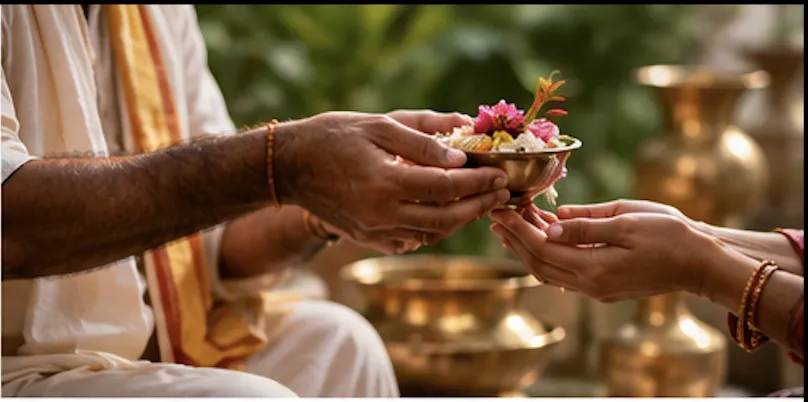
The ritual typically begins outside the threshold with Ganesh puja and the sankalpa, the statement of the family's names, gotra and purpose. The kalash is worshipped, and the couple of the household, often with the lady of the house carrying it, enter together, stepping in with the right foot first.
Inside, the priest performs Vastu puja, honouring Vastu Purusha, the deity of the dwelling, and often Navagraha puja for the nine planetary influences. A havan, a fire offering, is usually conducted in the main living area, with mantras for peace and protection. Some families also perform a Satyanarayan Puja or a shanti path.
A house becomes a home not when the furniture arrives, but when a family first lights a lamp in it with intention.
In the kitchen, milk is boiled in the new vessel until it rises and spills over, a traditional sign of abundance. The first meal cooked is offered to the deity before being shared, and food is often offered to priests, guests or those in need.
Many families make a point of sleeping in the house that night and keeping a lamp lit. It is also customary not to leave the home empty for the first few days. The ceremony usually takes between two and four hours depending on the rituals included.
A practical thought
If you are planning a griha pravesh, speak to your priest well in advance about the muhurat, the samagri and which rituals suit your family. Ask for each step to be explained as it happens, so that children and guests understand what they are witnessing. Griha Pravesh does not guarantee that a home will be fortunate; what it offers is a beginning made with care, gratitude and the people you love around you.
Vedic counsel and ritual are traditional and complementary practices — they sit alongside professional medical, legal and financial advice, never as a substitute for it.