
Satyanarayan Puja: A Ritual of Gratitude
Performed after a wedding, a new home or simply a good month, the Satyanarayan katha is one of the most loved household pujas. What happens and why.
 Acharya Ramesh Shastri
25 August 2026 · 3 min read
Acharya Ramesh Shastri
25 August 2026 · 3 min read
Of all the household pujas in North and West India, few are as familiar or as affectionately regarded as the Satyanarayan Puja. Families perform it after a wedding, on moving into a new home, after a child's birth, on completing an examination or a business milestone, or simply on a Purnima, the full Moon, because it has become part of the family's rhythm. It is unpretentious, warm and usually followed by a good deal of prasad and conversation.
Satyanarayan is a form of Vishnu, and the name means, broadly, "Narayana who is truth". The puja centres on the Satyanarayan Katha, a set of stories found in some recensions of the Skanda Purana, recited over the course of the ritual.
The stories and their point
The katha is made up of several short narratives. A poor Brahmin performs the puja and his circumstances improve. A woodcutter does the same. A merchant promises to perform it if he is granted a child, then delays and forgets, and meets with difficulty until he keeps his word. His daughter, in her eagerness to see her returning husband, leaves without accepting the prasad and has to return to receive it. A king refuses the prasad offered by cowherds and learns humility.
Read simply, the stories can sound transactional. Read more carefully, they have a consistent moral: keep your promises, do not be too proud to receive what is offered humbly, and remember gratitude when things go well. The puja is less about asking than about acknowledging.
At its heart the Satyanarayan katha is a reminder to keep one's word and to accept grace graciously.
How the puja is performed
The ritual is traditionally performed in the evening, though many families choose the morning. A Purnima, an Ekadashi or any day of significance to the family is suitable, and a priest can suggest a good muhurat if there is a particular occasion.
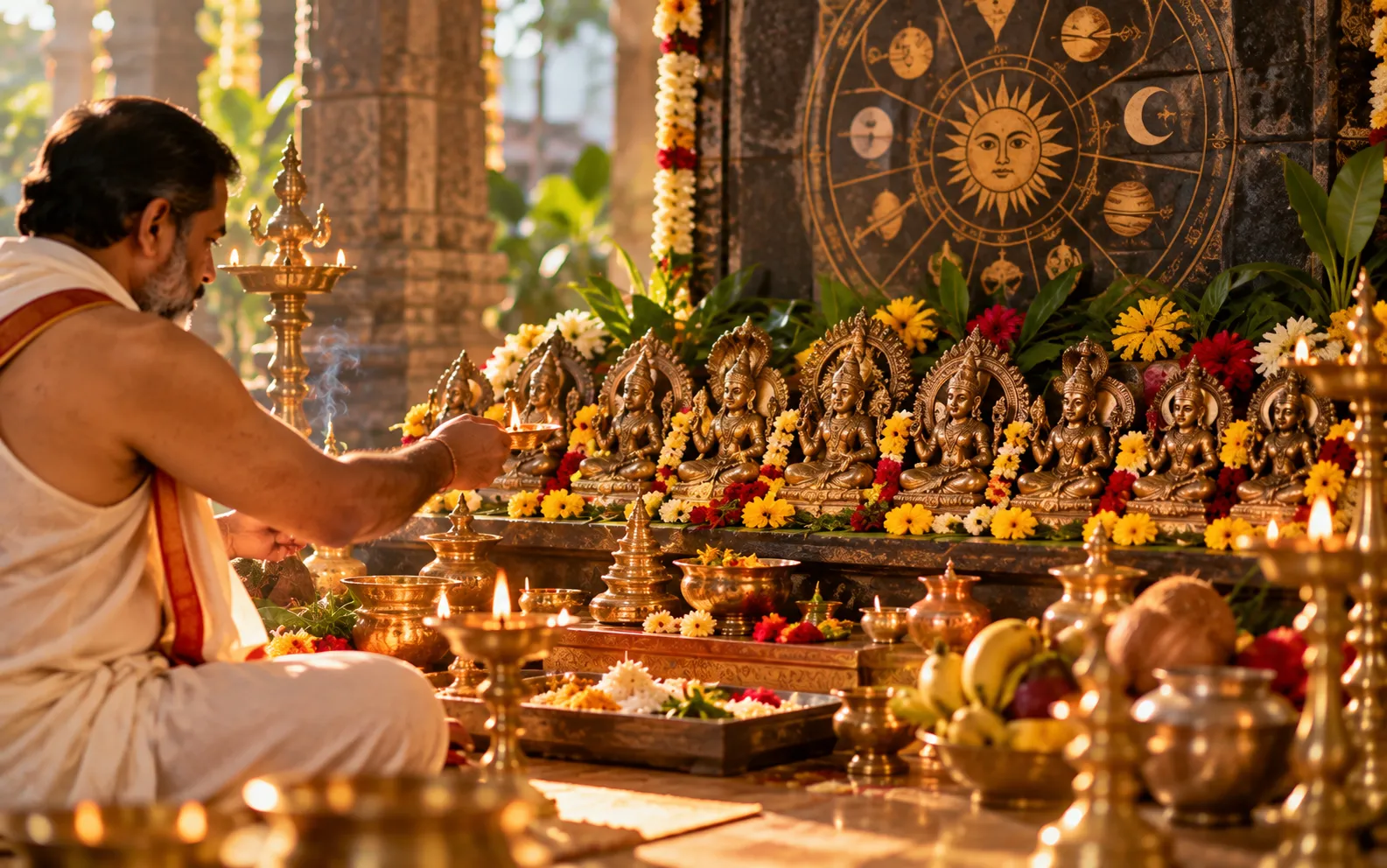
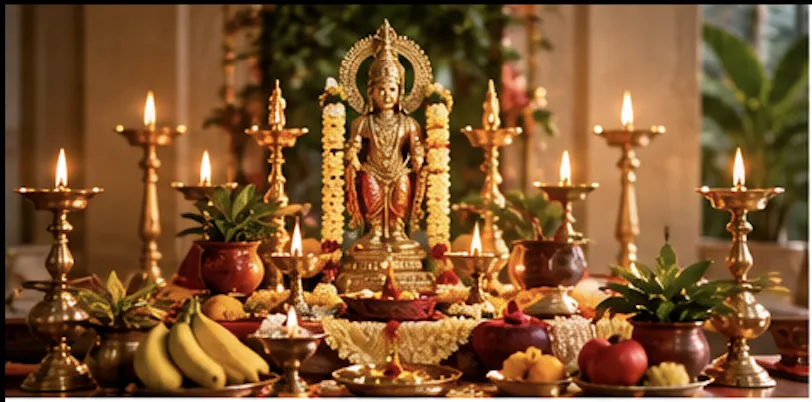
A small mandap, or altar, is arranged, often with banana leaves or stems at the corners. An image or picture of Satyanarayan is placed on a raised platform with a kalash, a water vessel topped with mango leaves and a coconut. The puja begins with Ganesh puja and the sankalpa, the statement of who is performing the ritual and why. The Navagraha, the nine planetary deities, are often invoked, followed by the main worship of Satyanarayan with water, flowers, tulsi leaves, sandalwood, incense and lamps.
The katha is then recited, chapter by chapter, often with a conch blown or a bell rung between sections. The puja concludes with aarti, and the distribution of prasad.
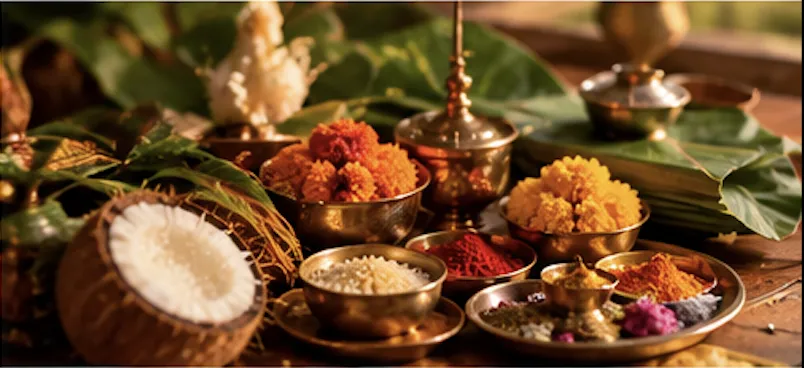
The samagri, the ritual materials, is simple. The traditional prasad, known as sheera or panjiri depending on the region, is made from roasted semolina or wheat flour, ghee, sugar, milk and banana in equal measures. Panchamrit, a mixture of milk, curd, ghee, honey and sugar, is also offered. Tulsi is considered essential, as it is in almost all worship of Vishnu.
What to expect
A Satyanarayan Puja typically takes between ninety minutes and two and a half hours. It is a ritual families take part in rather than watch: the yajamana, usually a couple, sits before the altar and makes the offerings with the priest's guidance, and guests join in the aarti. A priest who explains the steps and the stories in your own language, rather than racing through the Sanskrit, makes the evening far more meaningful.
A practical note
If you are planning one, invite people you would genuinely like to thank or share good news with; that is very much in the spirit of the ritual. Prepare prasad generously, since the katha itself insists that it be received by all present. And remember that the puja is an expression of gratitude, not a contract. Its value lies in the pause it creates, in which a family stops to acknowledge what has gone well.
Vedic counsel and ritual are traditional and complementary practices — they sit alongside professional medical, legal and financial advice, never as a substitute for it.