Sanskrit in Ritual: Why Translation Still Matters
The mantras stay in Sanskrit for good reasons. But the family sitting at the fire should still know what they are promising.
 Pandit Rajendra Prasad Mishra
17 December 2024 · 3 min read
Pandit Rajendra Prasad Mishra
17 December 2024 · 3 min read

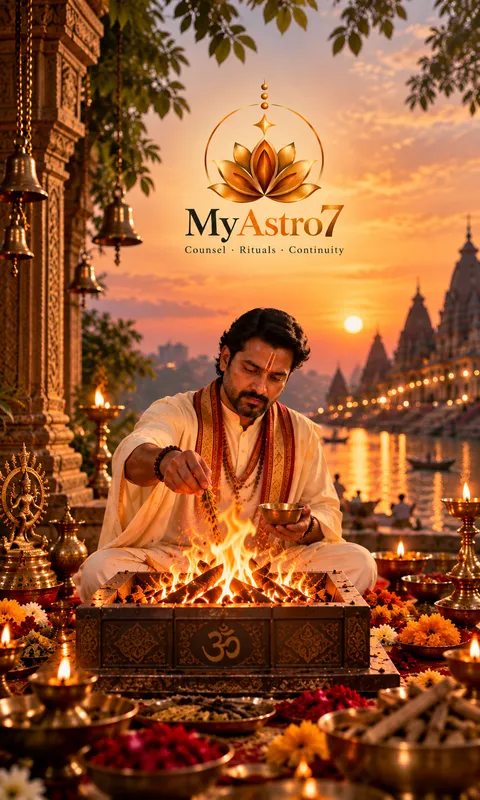
At almost every ceremony I conduct, someone in the family leans over afterwards and asks, a little embarrassed, what it was all about. They have sat at the fire for two hours, repeated words when asked, poured ghee when told, and understood almost none of it. I do not think this is their failure. I think it is ours.
In our Lucknow households the ceremonies are old and the families take them seriously. That is exactly why they deserve to understand them.
Why the Sanskrit stays
There are honest reasons the mantras are recited in Sanskrit and not in Hindi or English. Vedic mantras are fixed texts, transmitted with exact pronunciation and pitch for thousands of years; the tradition holds that their sound is part of what they are, not merely a container for meaning. A translated mantra is a different thing, a prayer about the mantra rather than the mantra itself. Sanskrit also gives continuity. The same verses are recited at a wedding in Lucknow, Kanchipuram and New Jersey, and a family can feel themselves part of something larger than a single generation.
None of this is an argument for incomprehension. The tradition never assumed the participant would not understand; it assumed an educated household that did.
The part that must be understood
The most important words in any ritual are the sankalpa, the formal declaration of intention at the start. In it the priest states the place, the date by the lunar calendar, the tithi, nakshatra and weekday, then the name and gotra of the yajamana, the person on whose behalf the ritual is done, and finally what is being undertaken and why. It is, in effect, a vow. A person making a vow should know what they are vowing.
The same applies to the vows of a wedding, the saptapadi, where each of the seven steps carries a specific promise, and to the shraddha, where a son or daughter addresses named ancestors. These are moments of commitment. Translation does not dilute them; it makes them real.
The mantra may stay in Sanskrit, but the vow belongs to the family, and a vow should be understood by the person making it.
What a good priest does
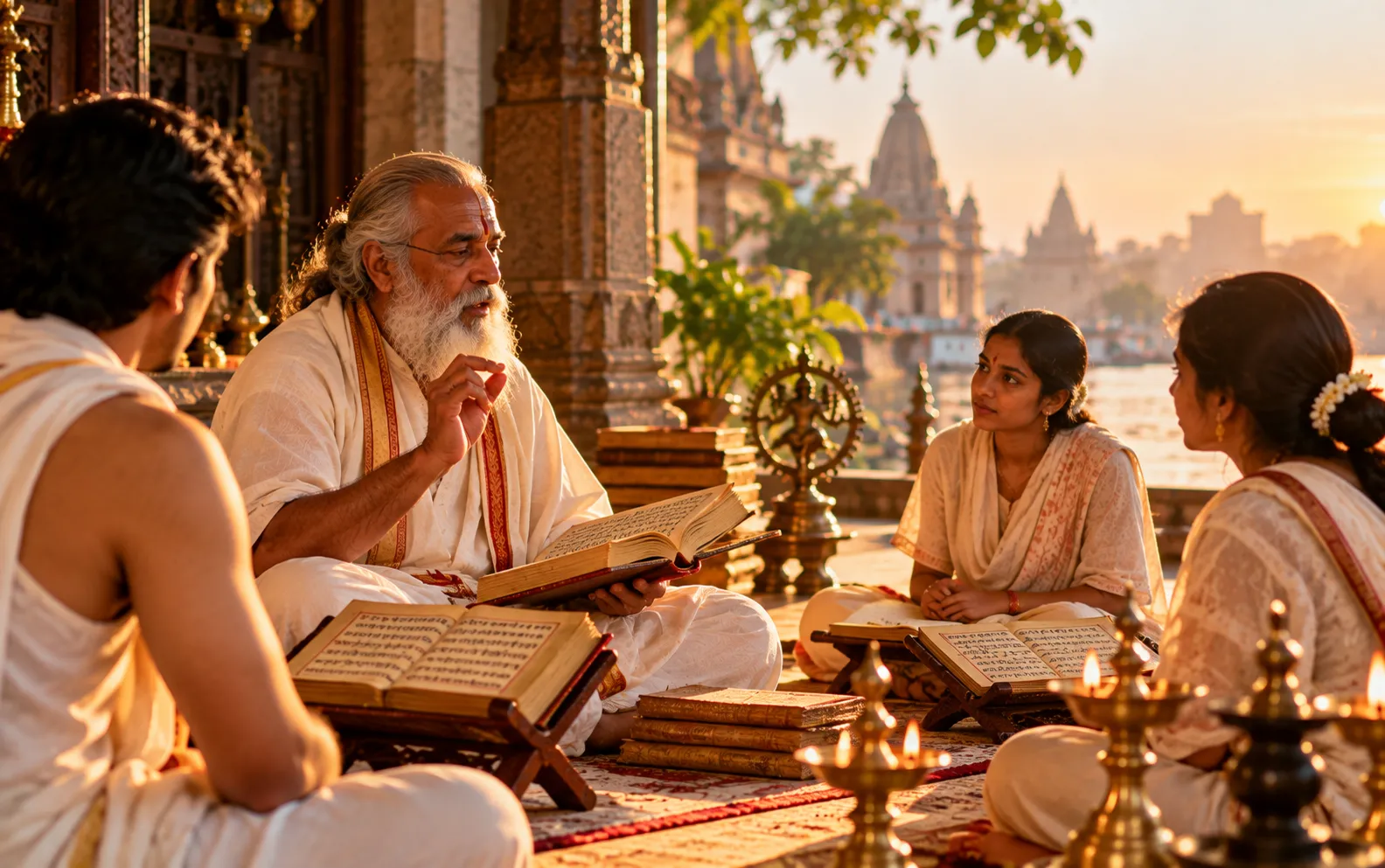
In my practice the arrangement is simple. Before the ceremony I sit with the family for half an hour and explain its structure: what happens first, what each offering represents, where they will be asked to speak. During the ritual I give a single sentence of explanation in Hindi or English at each turning point. The mantras themselves are not interrupted. Afterwards I leave a written outline. Families often keep it with their photographs.
Not every pandit works this way, and some feel explanation breaks the concentration of the rite. That is a fair view, and it can be honoured by explaining beforehand rather than during. What I would gently resist is the idea that understanding is unnecessary, or that asking is disrespectful. It never was.
If you are planning a ceremony, ask your priest in advance for a short outline of its stages and the meaning of the sankalpa. Ask whether they are comfortable explaining key moments as they go. Learn your gotra and the names of your grandparents before the day. You will find that the ritual, far from feeling less sacred, begins to feel like your own.
Vedic counsel and ritual are traditional and complementary practices — they sit alongside professional medical, legal and financial advice, never as a substitute for it.