Dharma, Plainly
Dharma is often translated as religion or duty, and both miss something. A plain account of what the word means and how it is used.
 MyAstro7 Editorial
12 September 2026 · 3 min read
MyAstro7 Editorial
12 September 2026 · 3 min read
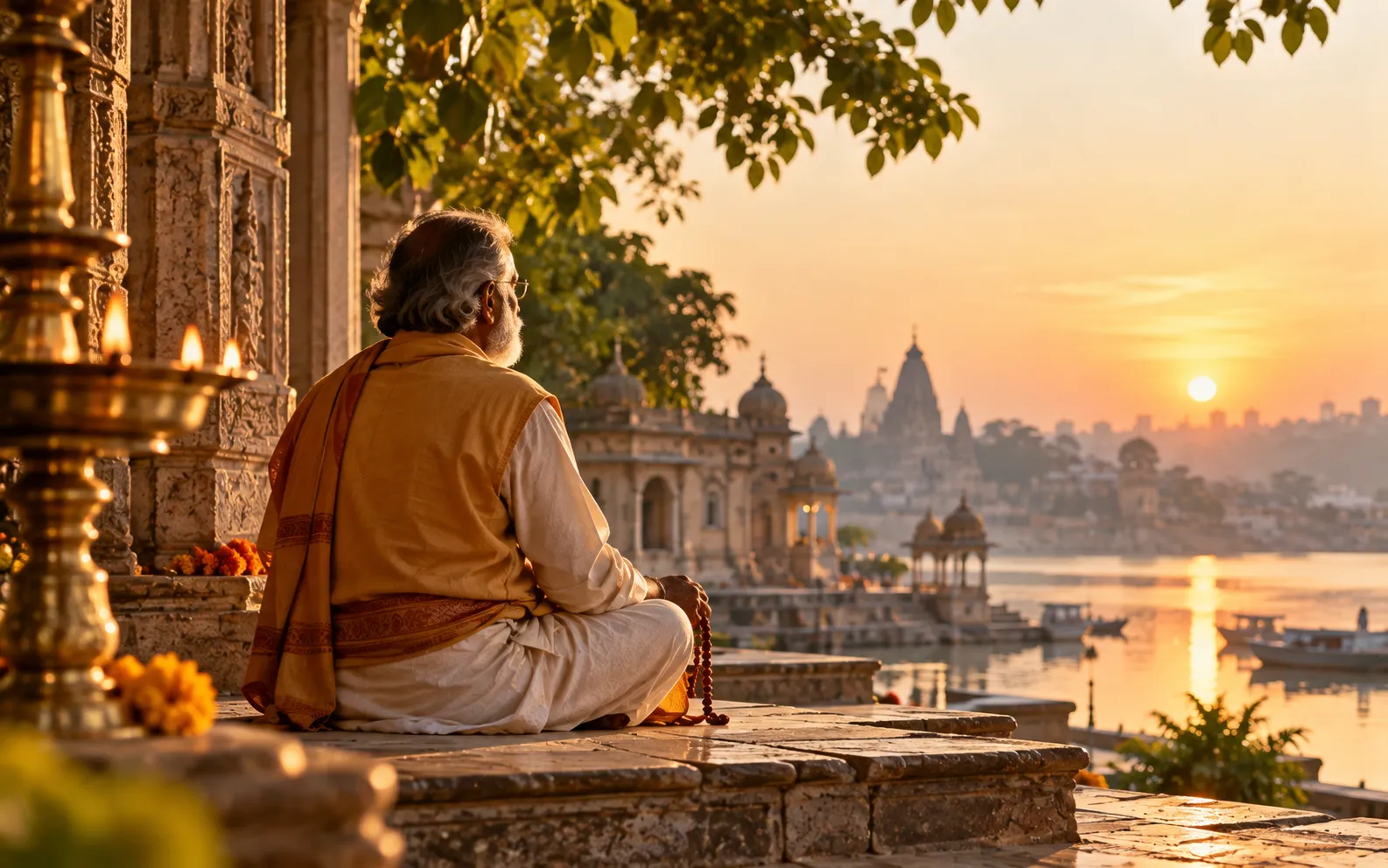
Dharma is one of the most important words in Indian thought and one of the hardest to translate. Religion, duty, law, righteousness and virtue have all been offered as equivalents, and each captures part of it. None captures the whole.
The root, dhr, means to hold or to support. Dharma is that which holds things together: the order that sustains a person, a family, a society and, in the older texts, the world itself. Starting from that root makes the rest easier to understand.
Several layers of meaning
In the Vedas, the older related word is rta, the cosmic order that keeps the seasons turning and the rivers flowing. Ritual was understood as a way of participating in and maintaining that order. Dharma gradually took over this sense and extended it to human conduct.
In the Dharmashastras, texts such as the Manusmriti and Yajnavalkya Smriti, dharma becomes a body of rules for conduct, law and ritual, often organised by stage of life and social role. Some of these rules reflect their time and have rightly been questioned and reformed. In the epics, especially the Mahabharata, dharma becomes something more searching: a question the characters argue over, often painfully, because the right thing is not obvious.
Svadharma and sadharana dharma
Two distinctions help. Sadharana dharma, the common dharma, refers to principles expected of everyone: non-violence, truthfulness, not stealing, self-restraint, cleanliness, compassion. Svadharma refers to one's own particular responsibilities, shaped by one's role, relationships and circumstances. A parent, a doctor, a judge and a student each have svadharma that differ, though all share the common dharma.
The Bhagavad Gita's famous line that it is better to perform one's own dharma imperfectly than another's well is about this second sense. It is not a call for rigid roles. It is an argument that each person must take responsibility for the particular obligations actually in front of them.
Dharma is less a rulebook than the question of what holds things together here, now, for these people.
Dharma as a living question
The tradition itself says that dharma is subtle, sukshma. The Mahabharata repeatedly shows characters who follow a rule correctly and still do wrong, or break a rule for a deeper good. This is not relativism; it is an acknowledgement that applying principles to real situations requires judgement, and that judgement must be exercised with care.
For this reason, the texts give several sources for knowing dharma: the Vedas, the remembered tradition, the conduct of good people, and one's own conscience, atmatushti. The last is easily overlooked. It means that inner clarity, honestly examined, is part of how one decides what is right.
What dharma is not
Dharma is not fatalism, and it is not a justification for injustice because something has always been done a certain way. Nor is it something a ritual can substitute for. Performing a puja does not discharge one's obligations to treat others fairly, to tell the truth, or to care for those who depend on us.
If you want to think about dharma practically, try asking three questions in a difficult situation: What do I owe the people involved? What would a person I admire do? And what does my conscience say when I am being honest with it? Those three questions, asked seriously, are very close to what the tradition means.
Vedic counsel and ritual are traditional and complementary practices — they sit alongside professional medical, legal and financial advice, never as a substitute for it.