

Vastu Shastra: Principles, Not Superstitions
Vastu is at its best as a sensible way of thinking about light, air, water and use of space. How to keep the principles and drop the fear.
 Pandit Krishnamurthy Rao
24 June 2026 · 3 min read
Pandit Krishnamurthy Rao
24 June 2026 · 3 min read
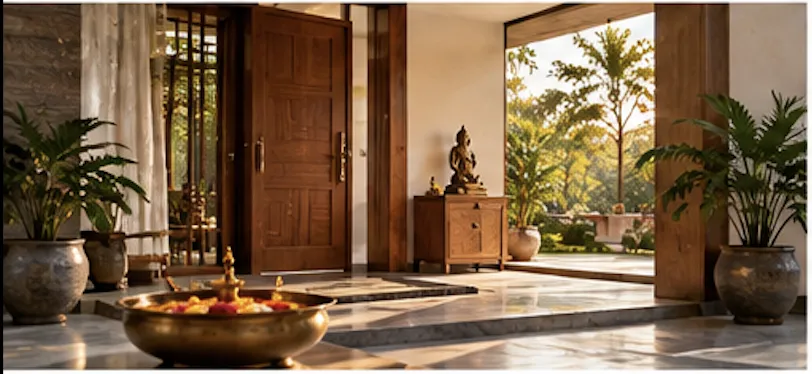
Vastu Shastra is the traditional Indian science of building and spatial arrangement. Its principles appear in texts such as the Mayamata, the Manasara and sections of the Brihat Samhita, and they were once the working knowledge of architects, temple builders and town planners. Today it is more often encountered as a list of warnings: never place the kitchen here, never sleep facing there, demolish this wall or suffer the consequences.
In Bengaluru, I am often called in after a family has already been frightened by such advice. I want to describe Vastu as I understand and practise it: a set of principles, many of them sensible, best applied with judgement rather than dread.
The underlying framework
Vastu begins with the idea of the Vastu Purusha mandala, a grid laid over a site, with a figure lying across it whose head is in the north-east. Different zones of the grid are associated with different deities and functions. The centre, the brahmasthana, is traditionally kept open and uncluttered.
The directions carry associations. The north-east, ishanya, is linked with water and with worship; the south-east, agneya, with fire, which is why kitchens are traditionally placed there; the south-west, nairritya, with stability, often suggested for the main bedroom; the north-west, vayavya, with air and movement.
The sense underneath
Many of these associations make practical sense in the Indian climate. Morning light enters from the east, so an open, light north-east is pleasant for prayer and study. A south-east kitchen gets morning sun and allows prevailing winds to carry smoke away in much of the subcontinent. Heavier construction in the south-west provides thermal mass against the hot afternoon sun. An open centre allows light and air through a house.
Read this way, Vastu is an older form of climate-responsive design. Its principles can be translated sensibly into modern buildings, even when they cannot be applied literally.
Vastu at its best is a way of paying attention to light, air and use, not a list of things to fear.
Where it goes wrong
Problems arise when principles become rigid rules divorced from their reasons. An apartment in a tower block cannot be oriented freely. A family cannot always move a kitchen without major cost. Advice that demands expensive demolition, or that attributes illness, financial trouble or a family dispute to the position of a toilet, does real harm. Health, money and relationships have causes that deserve proper professional attention.
I also counsel against the many products sold as Vastu corrections: pyramids, mirrors, strips and crystals promoted as fixes for structural concerns. The classical texts do not describe them, and their value is doubtful.
Applying it sensibly
For a new building, Vastu can be integrated early with an architect's plan, at little extra cost, and combined with structural, legal and municipal requirements that must always take precedence. For an existing home, the most useful changes are usually modest: decluttering the centre, using the north-east for a shrine or a quiet room, keeping entrances clean and well lit, improving cross-ventilation, and adjusting how rooms are used rather than rebuilding them.
If you are considering a Vastu review, share your floor plan and orientation in advance, ask the consultant to explain the reason behind each suggestion, and be cautious of any recommendation that is expensive, irreversible or framed as urgent. A good consultation should leave you calmer about your home, not more anxious.
Vedic counsel and ritual are traditional and complementary practices — they sit alongside professional medical, legal and financial advice, never as a substitute for it.