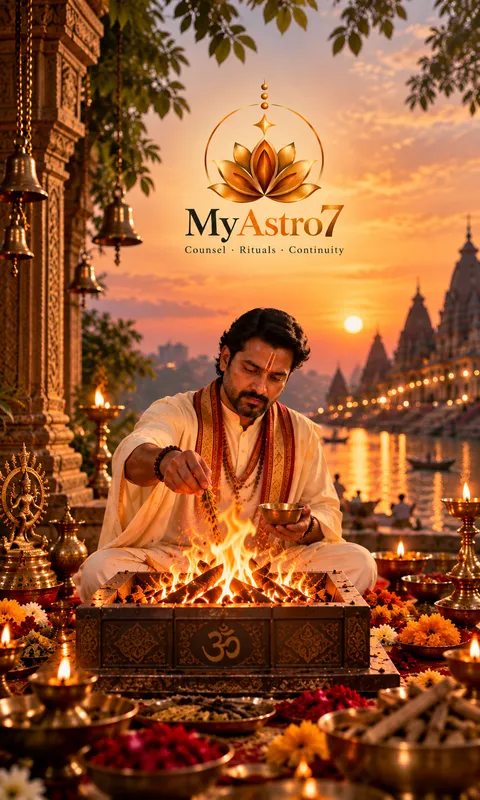
Annual Shraddha: Remembering Well
Shraddha is not a fearful duty owed to restless spirits. It is an annual act of gratitude to those who came before, and it can be done simply and well.
 Pandit Suresh Tripathi
9 September 2025 · 3 min read
Pandit Suresh Tripathi
9 September 2025 · 3 min read
Each year, on the tithi of a parent's or grandparent's death, many Hindu families perform shraddha. During Pitru Paksha, the fortnight before Navratri, many more offer remembrance for all their ancestors at once. Yet I meet families who approach these rites with anxiety, worried that a missed detail will bring misfortune, or that the departed will be displeased.
I would like to offer a calmer view. Shraddha comes from the word shraddha, meaning faith or sincere regard. At its heart, it is an act of gratitude.
When shraddha is performed
The annual shraddha, sometimes called the barsi in its first year, falls on the tithi (lunar day) of death, not the solar calendar date. So if a father died on the Shukla Panchami of Kartik, his shraddha is observed on that lunar day each year, which may fall on a different date in the calendar. A panchang or a priest can identify it.
Pitru Paksha, the dark fortnight of the month of Bhadrapada or Ashwin depending on regional calendars, is set aside for remembering all ancestors. Each tithi of the fortnight corresponds to those who died on that lunar day. The final day, Sarvapitri Amavasya, is for ancestors whose tithi is unknown, or for anyone the family wishes to include.
What the rite involves
A traditional shraddha includes tarpan, the offering of water mixed with black sesame and kusha grass, made while naming the ancestors of three generations on the father's and often the mother's side. Pinda daan, the offering of rice balls, follows. Food the departed enjoyed is often cooked, with a portion set aside for a cow, a crow and a dog, each traditionally associated with carrying the offering onwards. Brahmins or others in need are fed and given dakshina (an offering in gratitude).
The person offering, often the son or daughter, faces south and wears the sacred thread over the right shoulder, reversing its usual position, a sign that this rite belongs to the ancestors.
We do not perform shraddha because the dead are hungry, but because we are grateful, and gratitude needs a form.
Doing it simply
Not every family can perform an elaborate shraddha at Gaya or Haridwar each year, and the tradition does not require it. A simple shraddha at home, with tarpan, a meal cooked with care and a gift of food or money to someone in need, is entirely valid. Where a family cannot perform the rite themselves, a priest can perform it on their behalf, taking the sankalpa in their name and gotra.
What matters is sincerity and regularity: remembering on the day, saying the names aloud, and doing something good in the person's memory.
Beyond the ritual
Many families add something of their own. They tell a story about the grandfather at the meal, look through old photographs with the children, or support a cause the person cared about. These are not departures from shraddha. They are its spirit expressed in a family's own voice.
If you are unsure of your ancestors' tithis, ask the eldest relatives now and write them down, with names and gotra, in one place. That small record will help your family remember well for generations, and a priest can guide you through the rite whenever you are ready.
Vedic counsel and ritual are traditional and complementary practices — they sit alongside professional medical, legal and financial advice, never as a substitute for it.