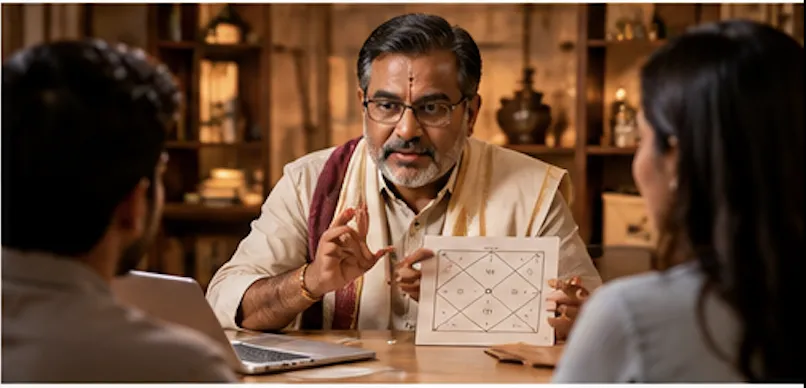

Astrology and Mental Health: Clear Boundaries
Jyotish can offer reflection and a sense of rhythm. It cannot diagnose or treat anxiety, depression or crisis, and a good practitioner will say so plainly.
 MyAstro7 Editorial
8 November 2024 · 3 min read
MyAstro7 Editorial
8 November 2024 · 3 min read

Many people come to a jyotish consultation during a hard season. A relationship has ended, work has become unbearable, sleep has gone. Sometimes what they describe is ordinary sorrow; sometimes it sounds more like depression, anxiety or something heavier. The practitioner sitting across from them has a responsibility that goes beyond reading a chart.
This article sets out, as plainly as we can, where Vedic astrology may be helpful to a person under strain, and where it must step aside.
What jyotish can reasonably offer
A chart can give a person a frame for reflection. Talk of a difficult dasha, a planetary period said to bring tests or slowing, can help some people feel that their present difficulty belongs to a season rather than to their whole life. Practices associated with remedial astrology, such as regular japa (repetition of a mantra), simple fasting, or visiting a temple on a particular weekday, can give structure to days that have lost it.
These are not small things. Routine, quiet and a sense of meaning do support wellbeing. But they are supports, not treatment.
What it cannot do
Jyotish cannot diagnose a mental health condition. It cannot tell you whether you have clinical depression, bipolar disorder, an anxiety disorder or the effects of trauma. It cannot replace medication a doctor has prescribed, and no gemstone, mantra or puja should ever be offered as a reason to stop that medication. It cannot assess risk of self-harm.
A practitioner who says that Saturn is the cause of your depression, and that a ritual will lift it, has crossed a line, however well-meaning. The danger is not only that the claim is unfounded. It is that it may delay someone from seeking care that actually works.
A chart may help a person find words for a hard season, but it must never stand between them and a doctor.
How a responsible practitioner behaves
A careful jyotishi listens for signs that a person needs more than a reading: persistent hopelessness, inability to function, talk of not wanting to live, sudden changes in behaviour. When those signs appear, the right response is to say so gently and clearly, and to encourage the person to speak to a doctor, psychiatrist or counsellor. If there is any immediate risk, the right response is to help them contact emergency services or a crisis line straight away.
The practitioner should also be careful with language. Words like dosha (an affliction in the chart) and phrases about bad periods can land very differently on someone who is already frightened. Fear is never a useful remedy.
Using both, wisely
Many families value both their faith and modern medicine, and there is no conflict in that. A person may see a psychiatrist on Tuesday and light a lamp at home every evening. A person may take prescribed medication and also find steadiness in chanting the Hanuman Chalisa. What matters is that the spiritual practice sits alongside professional care and never replaces it.
If you are struggling, the most practical step is to speak to a qualified mental health professional, and to someone you trust, before anything else. If you also wish to consult a jyotishi, tell them honestly what you are going through and what support you already have. A good practitioner will respect that, and will be glad you are not facing it alone.
Vedic counsel and ritual are traditional and complementary practices — they sit alongside professional medical, legal and financial advice, never as a substitute for it.