The Panchang as a Calendar for Living
Five elements, one day at a time. How the panchang works, what it was designed to do, and how to use it without letting it run your life.
 Jyotish Anand Vyas
15 November 2024 · 3 min read
Jyotish Anand Vyas
15 November 2024 · 3 min read
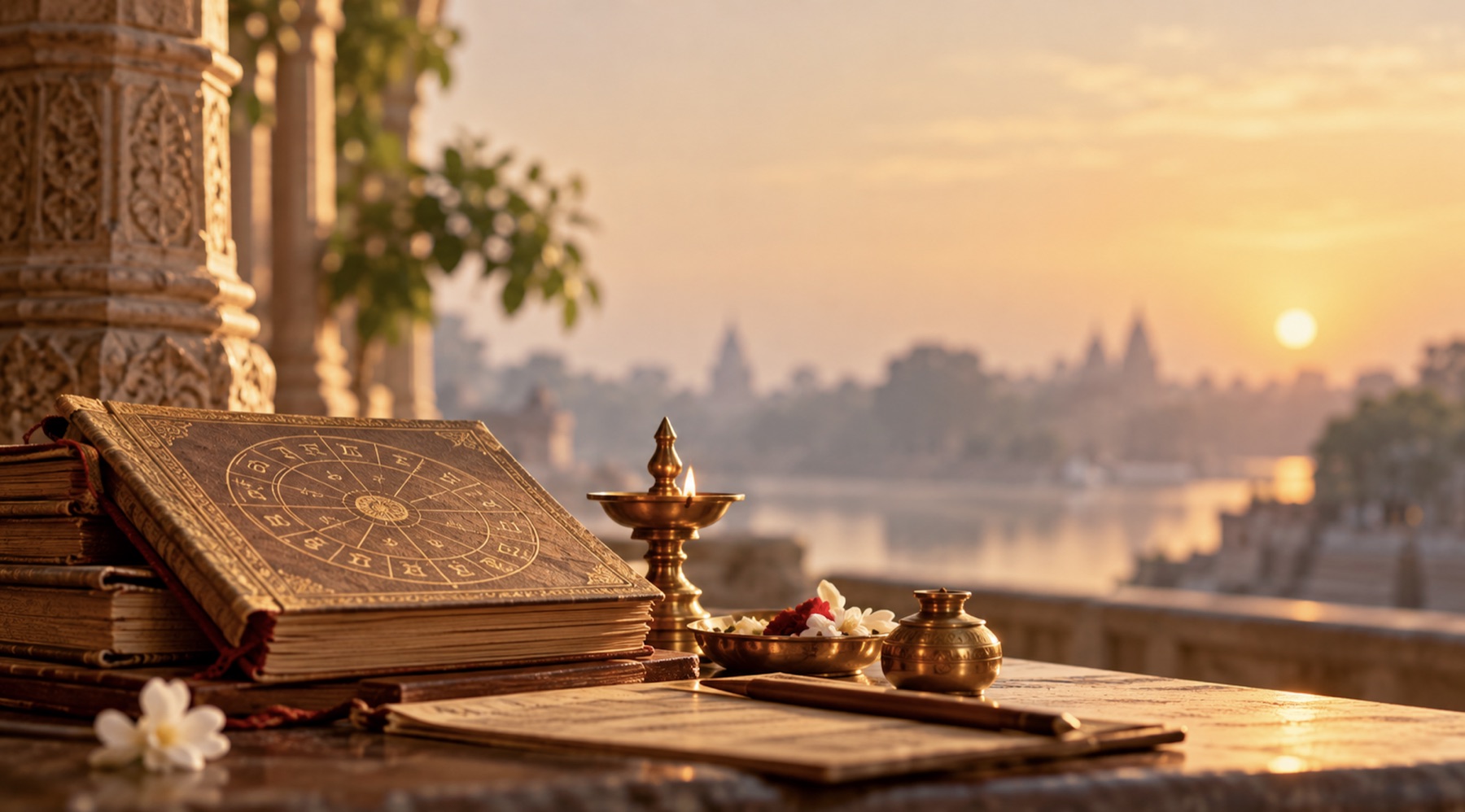
The panchang is the traditional Hindu almanac. Its name means five limbs, after the five elements it records for each day: tithi, vara, nakshatra, yoga and karana. Families have used it for centuries to fix festivals, fasts, ceremonies and the timing of important undertakings, and many still keep a printed one beside the calendar on the kitchen wall.
Used well, it is a calendar that keeps a household in step with the Moon, the seasons and its own traditions. Used anxiously, it can become a source of constant second-guessing. The difference is worth understanding.
The five limbs
Tithi is the lunar day, defined by the angular distance between the Sun and Moon; there are thirty in a lunar month, fifteen in the waxing half, shukla paksha, and fifteen in the waning half, krishna paksha. Tithis do not align with midnight-to-midnight days, which is why a festival may begin in the afternoon. Vara is the weekday, each associated with a planet.
Nakshatra is the lunar mansion, one of twenty-seven divisions of the sky the Moon passes through in roughly a month. Yoga, in this context, is a value derived from the combined longitudes of the Sun and Moon, giving twenty-seven named yogas. Karana is half a tithi; there are eleven karanas recurring through the month.
A panchang also usually records sunrise and sunset for a given place, rahu kalam (a daily period traditionally avoided for new beginnings), the solar and lunar month, eclipses and festival dates. Because these depend on location, a panchang for Chennai will differ in detail from one for Delhi or London.
What it is for
The panchang's most important function is calendrical. It tells a family when Ekadashi falls, when the shraddha tithi of a grandparent occurs, when Navaratri begins. Without it, much of the religious year would drift.
Its second function is muhurat, the selection of a suitable time for a significant act such as a wedding, griha pravesh or the start of a business. Here the panchang provides raw material, and an astrologer combines it with other factors, including sometimes the individual charts of those involved.
A panchang is meant to keep a household in rhythm, not to keep it in fear.
Using it without anxiety
The panchang was never meant to govern every small decision. Traditional households consulted it for festivals, fasts and major undertakings, not for when to send an email or buy groceries. Treating every rahu kalam as a danger zone, or delaying necessary medical treatment for a better nakshatra, misreads the tool. Health decisions belong with your doctor.
It is also worth knowing that panchangs differ by school. Regional traditions use slightly different calculation methods and calendar conventions, which is why your family may celebrate a festival a day earlier or later than a neighbour. Neither is wrong; they follow different reckonings.
If you would like to use a panchang well, pick one prepared for your city or region, and begin by marking the dates that matter to your family: festivals, fasts, ancestors' tithis, birthdays by nakshatra if that is your custom. Glance at the day's tithi and nakshatra each morning simply to notice them. For major events, ask an astrologer to choose the muhurat with you, and then trust the choice and get on with the preparations.
Vedic counsel and ritual are traditional and complementary practices — they sit alongside professional medical, legal and financial advice, never as a substitute for it.