Home Puja: A Simple Daily Practice
A lamp, a little water, a few minutes and a steady habit. How families have kept daily worship at home, and how to begin without overcomplicating it.
 Pandit Rajendra Prasad Mishra
2 December 2024 · 3 min read
Pandit Rajendra Prasad Mishra
2 December 2024 · 3 min read

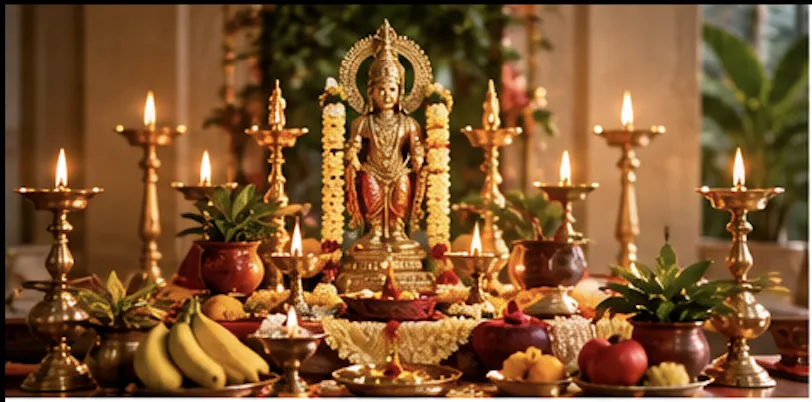
In the old houses of Lucknow, the puja room was often no more than an alcove: a shelf, a small brass lamp, a few images and a bell. Every morning someone, usually a grandmother, spent ten or fifteen minutes there. Nobody thought of it as a spiritual achievement. It was simply what one did after bathing and before breakfast.
Families today often tell me they would like a home practice but feel they do not know enough. The truth is that daily puja is one of the least demanding forms of worship in the tradition. What it asks for is regularity, not expertise.
The basic shape
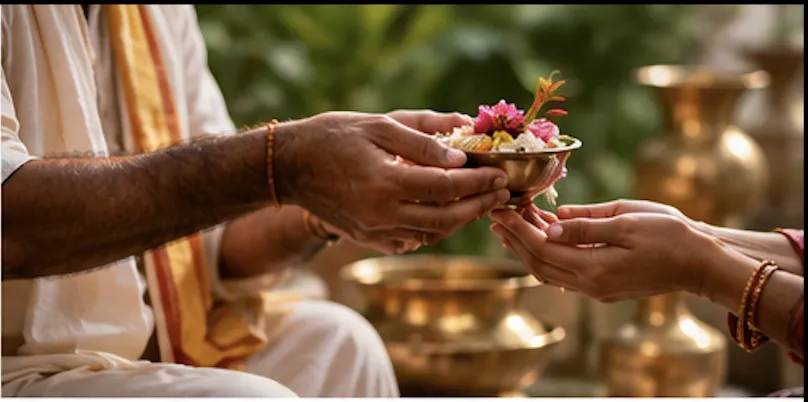
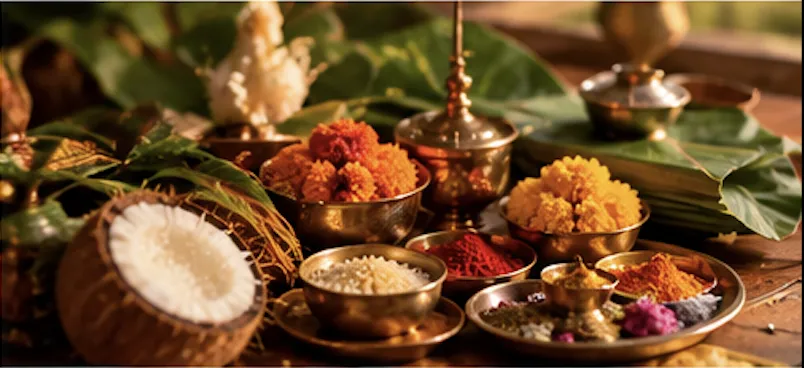
A simple daily puja usually follows the pattern of hospitality offered to an honoured guest. One cleans the space, lights a lamp, offers water, flowers or a little sandal paste, lights incense, offers some food such as fruit, sugar crystals or whatever has been cooked, and closes with arati, the waving of the lamp, and a moment of quiet.
This is the panchopachara, the five-fold service: gandha (fragrance), pushpa (flower), dhupa (incense), dipa (lamp) and naivedya (food). The fuller sixteen-fold form, shodashopachara, is reserved for special days. Five services done every morning will sustain a household practice for a lifetime.
What to recite
You do not need long texts. A short invocation to Ganesha, a mantra for your family deity, the Gayatri if it is part of your tradition, or a single shloka you understand is enough. Many families recite one chapter of the Gita, the Hanuman Chalisa or the Vishnu Sahasranama on particular weekdays. Learn one thing properly rather than ten things poorly.
If you are unsure of pronunciation, ask a priest or an elder to sit with you once and correct you. Recordings help, but a single patient lesson is better.
A daily puja asks for regularity, not expertise.
Practical questions
People often ask which direction the shrine should face. Traditionally, the worshipper faces east or north, and many families follow this where the house allows. Where it does not, sincerity matters more than orientation. A clean, uncluttered space that is not used for other purposes is more important than a perfect direction.
Others ask what to do when they are travelling, unwell or rushed. Then do less. Light a lamp and bow. Or simply recite a mantra mentally, which the tradition calls manasa puja, mental worship, and treats as fully valid. Days of illness, impurity periods after births and deaths, and genuine emergencies are accounted for in every family's customs.
What it gives, and what it does not
A daily puja does not promise prosperity or protection, and I am cautious with anyone who presents it that way. What it does is give the day a beginning that is not a screen, a few minutes in which the household remembers something larger than its immediate concerns. Over years, that adds up to a quiet, steady character in a home.
If you want to start, choose a small fixed place, a fixed time, and the five offerings. Keep it to ten minutes. Do it for forty days before adding anything. If you need help setting up the space or learning a mantra correctly, a practitioner can spend an hour with you, and that hour will likely be enough.
Vedic counsel and ritual are traditional and complementary practices — they sit alongside professional medical, legal and financial advice, never as a substitute for it.