
Teaching Children About Festivals
Children remember what they do, not what they are told. Practical ways to help them understand the festivals, beyond sweets and new clothes.
 MyAstro7 Editorial
15 July 2024 · 3 min read
MyAstro7 Editorial
15 July 2024 · 3 min read

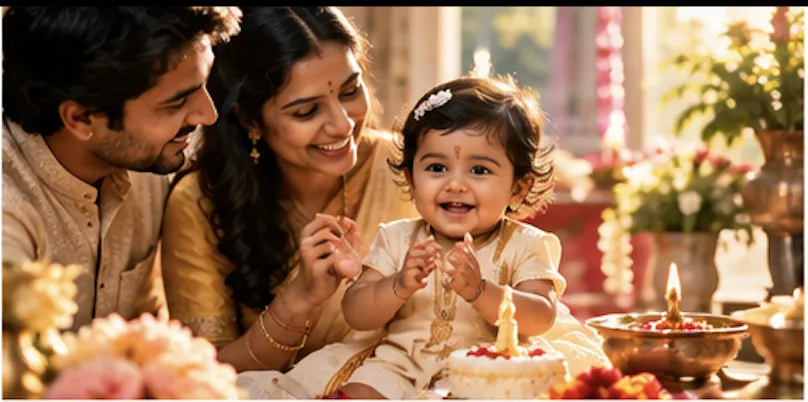
Ask a child what Diwali is about and you may hear: crackers, sweets and new clothes. That is not a bad start. Festivals are meant to be joyful, and joy is how children first attach themselves to anything. But many parents would like their children to understand a little more, to know why the lamps are lit, who Rama was, what Navratri celebrates.
The good news is that festivals are naturally suited to teaching. They return every year, they involve the senses, and they come with stories. What children need is not a lecture but a role.
Begin with the story
Every major festival has a story at its heart. Diwali recalls Rama's return to Ayodhya, and in other regions Krishna's victory over Narakasura or Lakshmi's emergence from the churning of the ocean. Holi recalls Prahlad's faith and the burning of Holika. Janmashtami tells of Krishna's birth in a prison cell at midnight.
Tell these stories a few days before the festival, at bedtime or over dinner, and let children ask questions. Picture books, short illustrated retellings and the Amar Chitra Katha comics that many parents grew up with all help. It is fine to mention that different regions tell different versions; children often find that fascinating rather than confusing.
Give them real tasks
Children remember what they do. Let them help clean the puja corner before Diwali, draw a rangoli at the door, arrange marigolds, shape the dough for laddoos, or fill diyas with oil. During Ganesh Chaturthi, they can help make a small clay idol. At Raksha Bandhan they can choose the rakhi.
Give them one task that is genuinely theirs each year, and increase it as they grow. A seven-year-old who lights one diya can, at twelve, be trusted to arrange the whole puja thali.
A child who has helped prepare the puja understands it in a way that no explanation alone can match.
Explain the why, briefly
Children ask why constantly, and festivals are a good occasion to answer. Why do we fast on Ekadashi? Why do we apply tilak? Why is the lamp kept facing east? Simple, honest answers work best. Where you do not know, say so and find out together, from an elder, a book or a family priest.
Avoid answers built on fear. Telling a child that Lakshmi will be angry if the house is untidy may work once, but it teaches the wrong thing about the tradition. Explaining that we clean and light lamps to welcome something good teaches the right one.
Connect festivals to values
Most festivals carry a clear moral thread. Diwali speaks of light over darkness and of homecoming. Holi speaks of faith and of forgiveness, of setting aside old grudges. Raksha Bandhan speaks of protection and family duty. Makar Sankranti, with its sharing of til and jaggery, speaks of sweetness in speech. Helping children see these threads gives the rituals meaning they can carry into ordinary life.
For the next festival in your calendar, choose one story to tell, one task to give each child, and one value to talk about. That small plan, repeated each year, will teach more than any single elaborate celebration.
Vedic counsel and ritual are traditional and complementary practices — they sit alongside professional medical, legal and financial advice, never as a substitute for it.