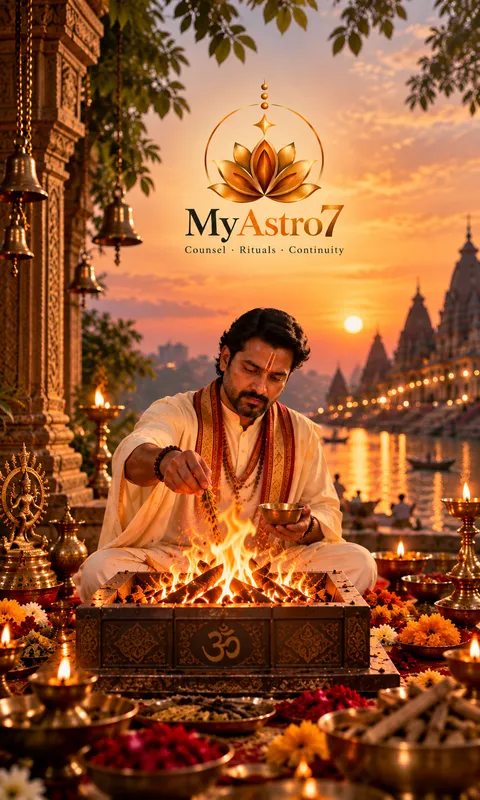
What Happens During a Yajna
A walk through the structure of a fire ritual, from sankalpa to closing.
 Pandit Mahesh Joshi
2 February 2026 · 1 min read
Pandit Mahesh Joshi
2 February 2026 · 1 min read

A yajna, or havan, is one of the oldest forms of Vedic ritual, and its structure has stayed largely intact for a reason: each part serves a purpose, and skipping one changes what the ritual is actually doing.
It begins with sankalpa — a stated intention. The practitioner names the occasion, the person or family on whose behalf the rite is performed, and the specific purpose. This is not a formality; it is what gives the rest of the ritual its direction. A havan performed without a clear sankalpa is, procedurally, an incomplete one.
The fire is then established in the havan kund, and the practitioner begins the offerings — samidha (wood), ghee and other materials specific to the occasion, each offered with an accompanying mantra. The number and sequence of these offerings is fixed by tradition for each type of havan; this is what people mean when they refer to a rite being performed 'in full' rather than abridged.
The ritual closes with a final offering, a blessing, and the distribution of prasad. What looks, from the outside, like a single continuous fire ceremony is really a sequence of distinct, deliberate steps — which is also why the duration and materials of a proper havan are stated plainly on this site rather than left vague.
Vedic counsel and ritual are traditional and complementary practices — they sit alongside professional medical, legal and financial advice, never as a substitute for it.