

Pregnancy Rituals: Seemantham and Godh Bharai
From the Tamil seemantham to the North Indian godh bharai, pregnancy rituals bless mother and child. What they involve, and what they do not replace.
 Acharya Vishwanath Iyer
21 May 2025 · 3 min read
Acharya Vishwanath Iyer
21 May 2025 · 3 min read

Among the sixteen samskaras, the traditional rites of passage, three belong to pregnancy: garbhadhana, pumsavana and simantonnayana. The last of these survives most widely today, as the seemantham of Tamil Nadu and Andhra Pradesh, the valaikappu that often accompanies it, the dohale jevan of Maharashtra, the shaad of Bengal and the godh bharai of the north. In Chennai I perform the seemantham regularly, and families ask me what it means and how it should be done.
Before anything else, one point should be clear. These are rites of blessing and celebration. They do not replace antenatal care, and the mother's obstetrician remains the authority on her health and the baby's.
The seemantham
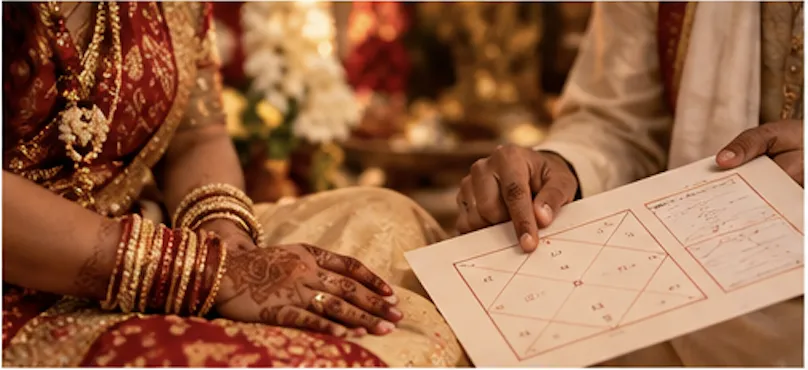
The word simantonnayana means the parting of the hair. In the classical rite, the husband parts his wife's hair with a porcupine quill or a sprig of darbha grass while mantras are recited for the health of mother and child. The rite is traditionally performed in the fifth, seventh or eighth month of pregnancy, on a day chosen by its tithi and nakshatra.
Today the seemantham usually includes a small homam, the fire ritual, prayers to the family deity, and the blessing of the mother by elder women of the family. Glass bangles are placed on her wrists in the valaikappu, their sound traditionally said to soothe the baby. She is dressed in a new silk saree, fed foods she craves, and showered with flowers and akshata.
Godh bharai and its cousins
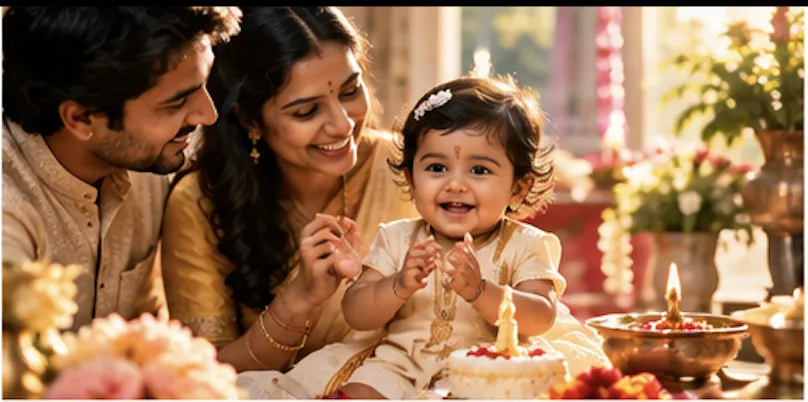
Godh bharai means filling the lap. Women of the family fill the mother's lap with fruit, coconut, dry fruits, sweets and gifts, symbolising abundance for the coming child. It is more a social celebration than a formal Vedic rite, though many families begin it with a short puja. In Maharashtra, the dohale jevan centres on feeding the mother her cravings; in Bengal, the shaad brings her favourite dishes in a ritual meal.
The heart of every pregnancy rite is the same: a family gathers to tell a mother she is cared for, and that the child is already loved.
Practical care on the day
The mother's comfort comes first. Choose a time of day when she usually feels well, keep the ceremony short, and seat her comfortably with back support. She should not fast unless her doctor agrees. The homam smoke should be modest and the room well ventilated. Long rituals in heat, heavy jewellery and crowded rooms are not kind to a woman in her seventh month; a sensible priest will adjust without being asked.
Where a pregnancy has complications, or the doctor has advised rest, the rite can be simplified to a short prayer at home, or postponed. There is no tradition worth honouring at the expense of a mother's wellbeing.
A note on sensitivity
These occasions can be painful for family members who have experienced loss or difficulty conceiving. A gentle invitation, and no pressure to take part, is a kindness. Equally, some families prefer not to celebrate until after the birth, which is a respectable choice.
If you are planning a seemantham or godh bharai, speak with the mother and her doctor first about timing and comfort, then ask a priest to suggest a suitable day within that window. Keep the focus on her, and the rest will follow.
Vedic counsel and ritual are traditional and complementary practices — they sit alongside professional medical, legal and financial advice, never as a substitute for it.