
Rudrabhishek: Worshipping Shiva Through Abhisheka
Water, milk and the Sri Rudram: a careful look at one of the oldest forms of Shiva worship, and why it is chanted the way it is.
 Pandit Shivkumar Iyer
11 August 2025 · 3 min read
Pandit Shivkumar Iyer
11 August 2025 · 3 min read

Abhisheka means ritual bathing. In a Rudrabhishek, the lingam, the aniconic form of Shiva, is bathed in a sequence of liquids while the Sri Rudram from the Krishna Yajurveda is recited. It is one of the oldest continuous forms of Shiva worship, and in temple traditions like those of Kanchipuram it is performed with great precision.
Families often book a Rudrabhishek on Mondays, during the month of Shravana, or on Maha Shivaratri. They also book it during illness, loss or uncertainty. That is understandable, and it deserves an honest word about what the rite is and is not doing.
The Sri Rudram
The Sri Rudram is in two parts. The Namakam, built around the repeated word namah, salutes Rudra in every conceivable form: in the forest and the city, in the thief and the guardian, in the river and the dust. The Chamakam, built around cha me, and for me, asks in long lists for the ordinary goods of life, from food and health to clear thinking and companionship.
Taken together, the two halves are an education. The first teaches that the divine is present everywhere, including in what we fear. The second teaches that it is honest to ask for what one needs. Many traditions recite the Rudram eleven times, an ekadasha rudra, or in larger multiples for major occasions.
The sequence of offerings
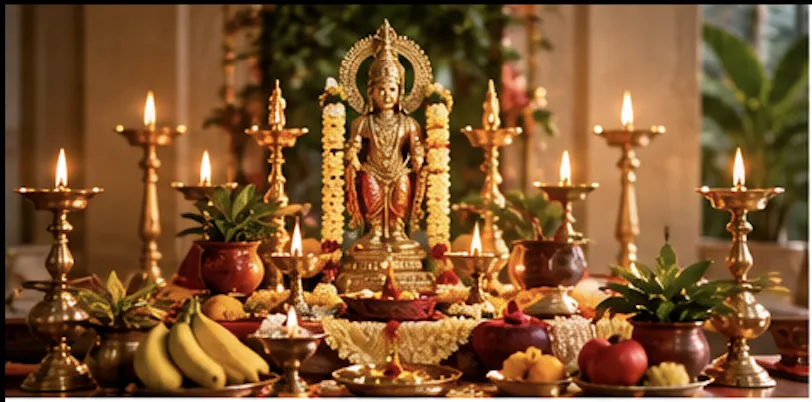
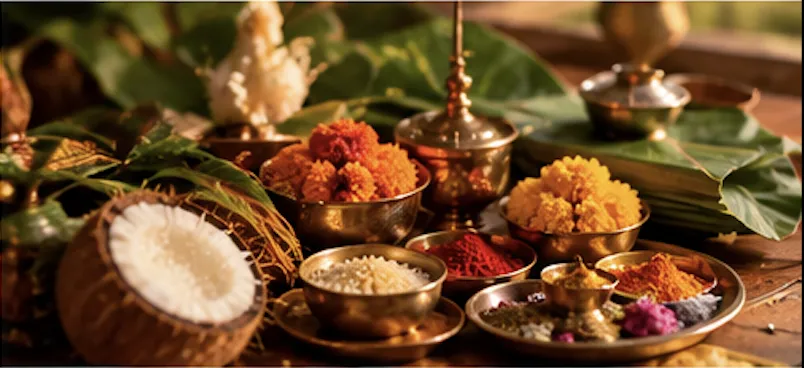
A typical abhisheka uses water, milk, curd, ghee, honey and sugar, sometimes combined as panchamrita, followed by coconut water, sugarcane juice, sandal paste and vibhuti, the sacred ash. Each substance is poured slowly over the lingam while specific sections are chanted. Bilva leaves, which are dear to Shiva in the tradition, are offered at the end with the names of the deity.
The order matters to practitioners, and so does the quality of the samagri. Fresh milk, pure ghee and clean water are not decorative choices. A careless abhisheka with adulterated materials and rushed chanting is, by the tradition's own standards, a lesser offering.
The Rudram asks you to see Shiva in what you fear, and only then to ask for what you need.
Recitation is the core
The Rudram is chanted with svara, the pitch accents of Vedic recitation, and the accents are not ornamental. They are part of how the text has been preserved unchanged for an extraordinarily long time. For this reason, families who want a Rudrabhishek usually engage priests trained in Yajurveda recitation rather than reading the text from a booklet.
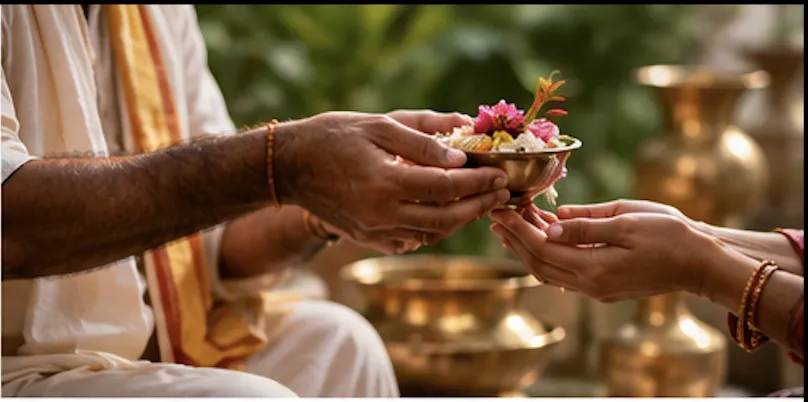
That said, the family's participation matters. Sitting attentively, pouring some of the offerings yourself under guidance, and understanding the outline of the Namakam and Chamakam make the rite yours rather than something watched from a distance.
What to expect, honestly
Rudrabhishek is an act of worship. It can bring steadiness, a sense of having done something meaningful, and a family gathered together in a difficult time. It is not a treatment and does not replace medical care. If you are performing it for someone who is unwell, please let the doctors do their work alongside it.
If you plan to perform one, decide whether you want it at a temple or at home, ask how many recitations of the Rudram will be included, and read a translation of the Chamakam beforehand. You may be surprised by how ordinary, and how sensible, its requests are.
Vedic counsel and ritual are traditional and complementary practices — they sit alongside professional medical, legal and financial advice, never as a substitute for it.