Bringing Elders and the Next Generation Together Around Ritual
Grandparents hold the knowledge; grandchildren hold the questions. How shared ritual can become a place where generations actually meet.
 MyAstro7 Editorial
11 April 2026 · 3 min read
MyAstro7 Editorial
11 April 2026 · 3 min read
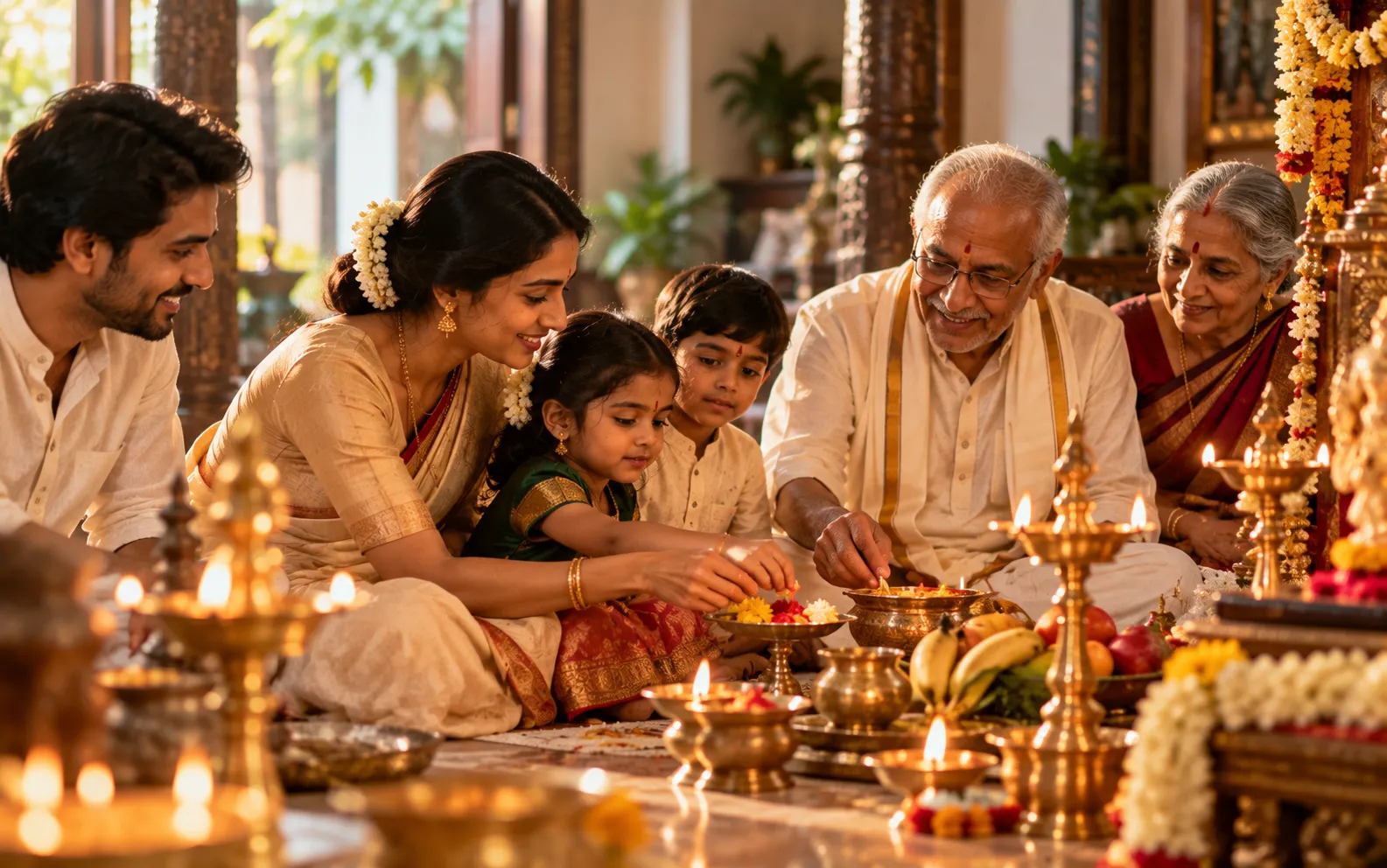
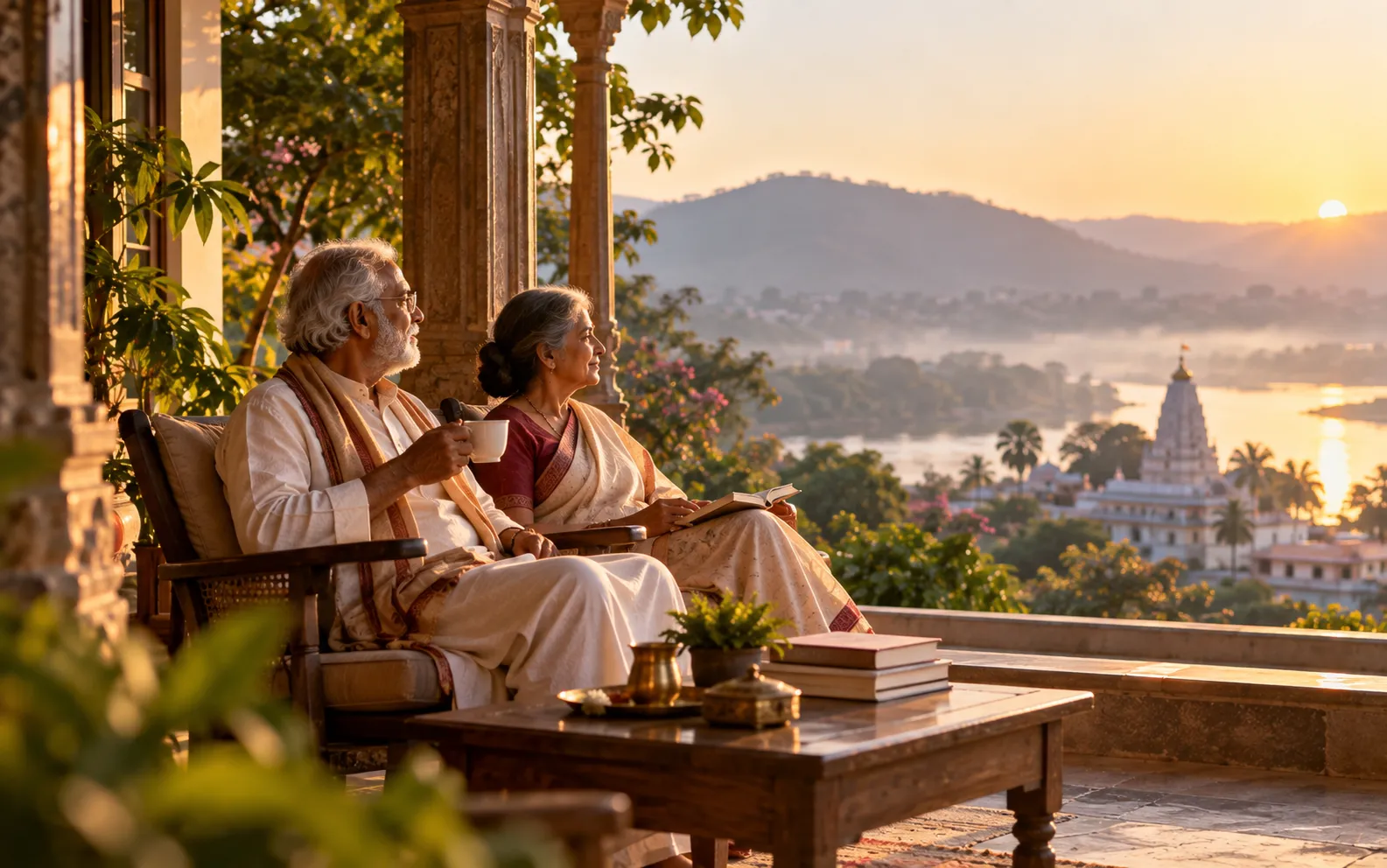
In many Indian homes, ritual knowledge lives almost entirely with one or two elders. A grandmother knows which flowers go to which deity, how the Satyanarayan katha is read, what is cooked on Ekadashi. Her children watched her for years but rarely learnt the steps. Her grandchildren, often living in another city or country, may know only the festival photographs.
When that grandmother is gone, a great deal can go with her. Yet ritual can also be one of the easiest places for generations to meet, if families approach it deliberately.
Why ritual suits this work
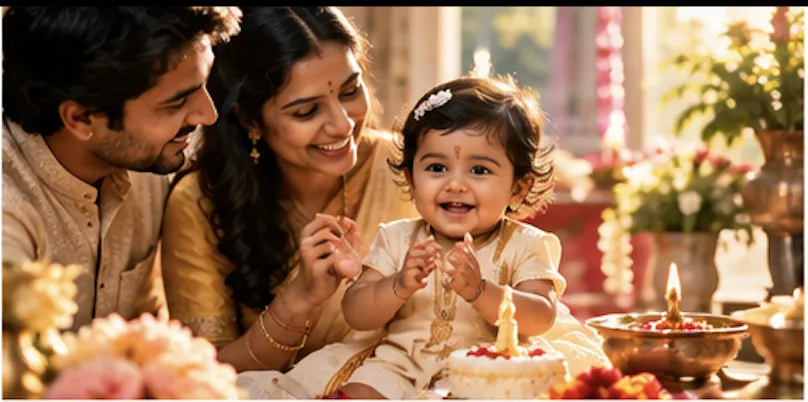
Ritual is practical. It involves hands as well as words: arranging samagri (the materials used in a puja, such as rice, turmeric, flowers and ghee), lighting the diya, drawing a rangoli. Children who would not sit through a lecture on tradition will happily help shape modaks or tie a mango-leaf toran. Elders, meanwhile, are often most at ease when teaching something they know by heart.
Ritual also follows a calendar. Festivals, vrats and anniversaries return each year, which gives a family repeated occasions to practise rather than a single conversation that is quickly forgotten.
Making room for questions
Younger people often ask why. Why do we face east? Why can we not eat onion today? Some elders find these questions uncomfortable, as if they implied doubt. It helps to treat them as signs of interest. Where an elder knows the reason, they can share it; where they do not, it is perfectly honest to say, this is how my mother did it, and to look it up together or ask a family priest.
The tradition itself is comfortable with questions. Much of the Upanishadic literature takes the form of a student asking and a teacher answering.
The point is not to freeze a grandmother's practice in place, but to let her grandchildren carry it forward in their own hands.
Simple ways to begin
Ask an elder to lead one ritual in the coming year, and to explain each step aloud while a younger family member assists. Record it, with permission, on video or in a notebook: the order of steps, the mantras, the recipes, the small family variations. Many families find that a single carefully written page about how we do Lakshmi puja becomes a treasured document.
Let younger members take responsibility for something real, such as preparing the puja thali, reading a portion of the katha, or managing the arrangements for a family havan. Responsibility builds attachment far faster than observation.
Where family members live apart, a video call during the aarti, with the grandchildren holding their own small diyas at the same moment, is not a lesser form of participation. It is simply a new form of an old practice.
Respecting both sides
Elders may need to accept that the next generation will adapt things, shorter rituals, explanations in English, a different festival menu. The young may need to accept that some elements matter deeply to their elders even when the reason is hard to articulate. Neither side should be made to feel foolish.
This year, choose one festival or ritual and ask the eldest person who knows it to teach it properly to the youngest who is willing to learn. Write down what they say. If you would like a practitioner to guide the family through a fuller ceremony, they can help, but the teaching that matters most begins at home.
Vedic counsel and ritual are traditional and complementary practices — they sit alongside professional medical, legal and financial advice, never as a substitute for it.